

Colombian Emerald Engagement Rings in Australia: A Complete Buyer's Walkthrough
Choosing an emerald for an engagement ring is a different process from choosing a diamond. The variables are less standardised, the sourcing chain is less transparent, and the quality differences between stones at similar price points can be significant. This guide walks through every decision point - from stone selection to setting style to certification - so you can approach the process with clarity.
This is written specifically for the Australian market, where access to verified Colombian supply and in-person viewings before purchase are both achievable.
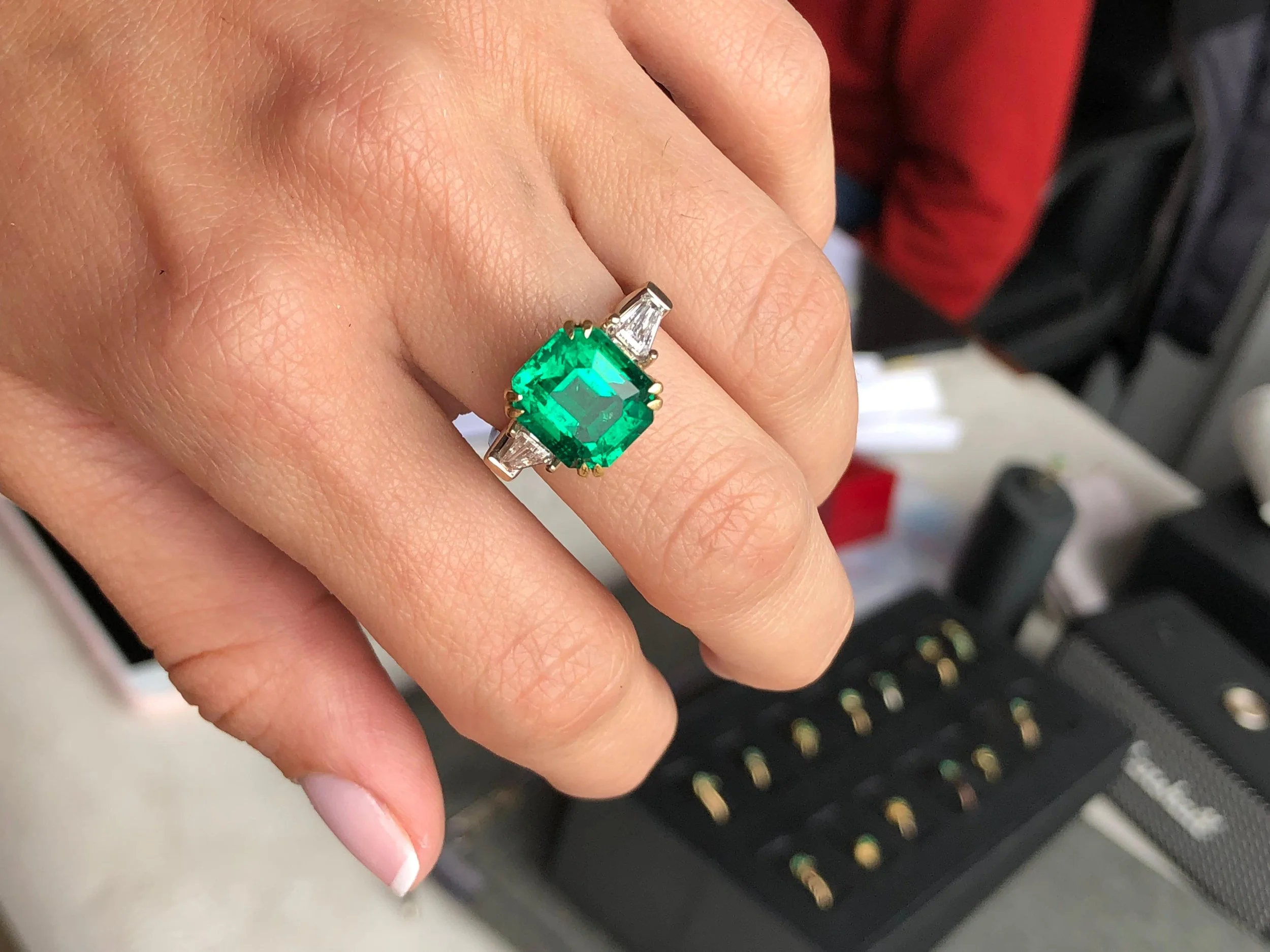
Why Colombian Emeralds Remain the Benchmark for Engagement Rings
Not all emeralds carry the same commercial or aesthetic value. Origin matters - and within the global emerald market, Colombia has held the premium position for decades.
Colombian emeralds, particularly from the Muzo, Chivor, and Coscuez mines in the Boyaca department, produce stones with a distinct colour character: a warm, slightly bluish-green with strong saturation and natural fluorescence. This is what the trade refers to as "Muzo Green" - a colour profile that Zambian, Brazilian, and Afghan emeralds consistently fail to replicate at equivalent grades.
For an engagement ring, this origin distinction has practical consequences:
Colombian emeralds retain higher secondary market value than emeralds of undisclosed or alternative origin
GIA and Gübelin origin reports for Colombian stones carry specific commercial weight with dealers and insurers
The colour that reads most distinctly as "emerald" under natural and indoor light is consistently produced by the Colombian deposits
This is not a marketing claim. It is reflected in how stones are priced at the wholesale and retail level across every major gem market.
Understanding Emerald Quality Before You Set a Budget
The 4Cs Applied to Emeralds - and Where They Differ from Diamonds
Colour, Clarity, Cut, and Carat weight all apply to emeralds, but they function differently than in diamond grading.
Colour is the primary value driver. A vivid, well-saturated green with no strong yellow or grey modifier commands a significant premium over a pale or heavily-toned stone of the same carat weight. When assessing colour, view the stone under both daylight-equivalent lighting and warm indoor light. The colour should remain stable and rich in both environments.
Clarity in emeralds is evaluated differently than in diamonds. Almost all natural emeralds contain inclusions - the internal fracture networks and mineral traces that the trade calls "jardin" (French for garden). A completely eye-clean Colombian emerald is exceptionally rare. The practical question is not whether inclusions exist, but whether they are positioned to affect durability or visual appeal. Surface-reaching fractures present a different risk profile than inclusions fully enclosed within the stone.
Cut in emeralds is often a compromise between retaining weight and presenting the stone at its best colour. The rectangular step cut commonly called the "emerald cut" was originally developed for this specific gem, as it preserves carat weight while showcasing colour depth. Oval, cushion, and pear shapes are also widely used for engagement rings and can produce excellent results on well-proportioned stones.
Carat weight matters, but a 1.5ct stone with excellent colour and minimal treatment will outperform a 2ct stone with washed-out colour and significant fracture filling in both visual impact and resale value.
Treatment Disclosure: What to Ask Before Committing
Natural emeralds are routinely treated with cedar oil or resin to reduce the appearance of surface-reaching fractures and improve clarity. This is an accepted and disclosed industry practice, but the degree of treatment affects value and long-term durability.
GIA grades emerald treatment on a four-level scale: None, Minor, Moderate, and Significant (sometimes listed as F1, F2, F3, and beyond). For an engagement ring stone - a piece worn daily and subject to ultrasonic cleaning, heat, and chemical exposure - treatment level is a practical consideration, not just a value one.
A stone graded "None" or "Minor" by GIA or an equivalent lab is structurally more stable and easier to maintain. Stones with "Moderate" or "Significant" treatment may need periodic re-treatment and require careful handling.
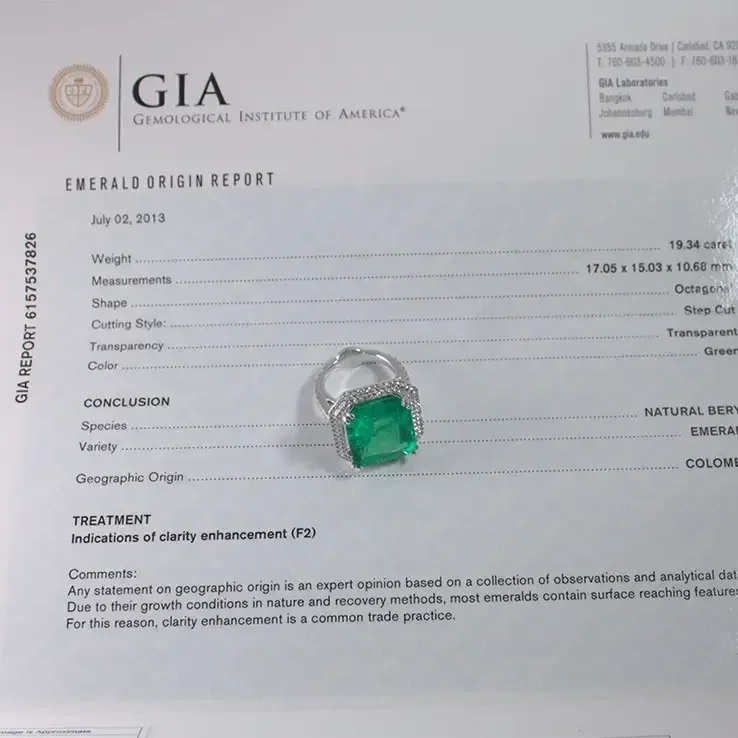
Always request the treatment disclosure in writing, ideally on a lab report from GIA, Gübelin, SSEF, or GRS. Verbal assurances from a seller without documentary evidence are insufficient. See our Lab Partners and Certification Guidefor a breakdown of which reports cover what, and how to read them correctly.
The Bespoke Route: How Custom Emerald Engagement Rings Work in Australia
Why Bespoke Makes Sense for Emerald Rings
Unlike diamond engagement rings, where standardised grading allows stones to be compared and exchanged between jewellers with relative ease, emerald engagement rings benefit significantly from a bespoke approach. The reasons are structural:
Each Colombian emerald has a unique shape, colour profile, and inclusion pattern. A setting designed around the specific stone produces a more coherent result than adapting a standard setting to an emerald that does not quite fit it.
Emeralds require protective setting choices. The corners of an emerald cut are the most vulnerable points of the stone. A well-designed bezel or halo setting can protect these areas without compromising the visual presentation.
The colour of the metal affects how the stone reads. Yellow gold warms a slightly cooler stone; platinum or white gold suits a stone with stronger blue-green saturation. These decisions are easier to make correctly when the stone and the setting are being designed together.
The Process at Colombian Gems
The bespoke engagement ring process at Colombian Gems begins with stone selection - either from current inventory or through a sourcing request from our supply network in Colombia. Clients based in Sydney can view stones in person before committing. Remote clients receive detailed video, specification sheets, and GIA or equivalent lab reports.
Once a stone is selected, the design phase covers:
Metal choice (platinum, 18ct white gold, 18ct yellow gold, 18ct rose gold)
Setting style (halo, bezel, claw, three-stone, east-west)
Band profile and width
Any additional stones (diamonds, sapphires, tsavorites as accent stones)
Finger-size confirmation
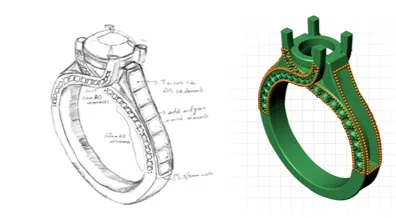
The design is typically presented as a computer-rendered 3D model before casting begins. Lead times from stone selection to completed ring range from four to eight weeks depending on design complexity and the goldsmith's schedule.
Detailed timelines and the full process are covered on our Bespoke Jewellery page.
Emerald Engagement Ring Costs in Australia: A Realistic Breakdown
Cost varies significantly depending on stone quality, carat weight, and setting complexity. The following ranges reflect current market pricing for verified Colombian emeralds with GIA or equivalent certification, set in Australia.
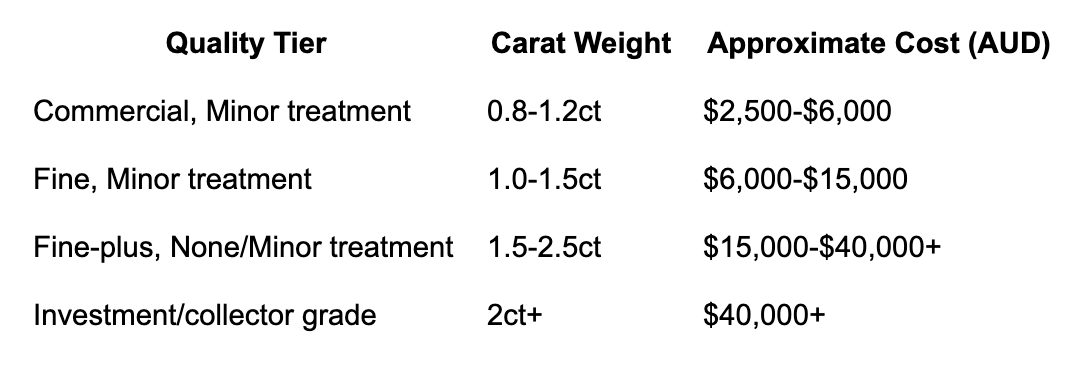
These figures are for loose stones only. The setting adds cost depending on metal choice and design complexity.
Setting Costs
A well-executed bespoke setting in 18ct gold typically ranges from $2,500 to $6,000 AUD, depending on complexity, the number of accent stones, and the goldsmith. Platinum settings carry a premium of approximately 20-30% over gold equivalents due to material and working costs.
What Drives Cost Up
Higher treatment grade (None vs Minor adds a meaningful premium at every carat weight)
Muzo or Chivor mine-specific origin certificate
Vivid saturation rather than medium-light colour grade
Gübelin or SSEF certification in addition to GIA
What Drives Cost Down Without Sacrificing Quality
Accepting inclusions that are not eye-visible from a normal viewing distance
Choosing an oval or cushion cut over an emerald cut (ovals often present better colour per carat weight)
Working with 18ct yellow gold rather than platinum
Selecting a clean, simple solitaire setting rather than a halo or three-stone configuration
For a full breakdown of pricing factors, see our Colombian Emerald Pricing Guide.
Emerald Engagement Ring Settings: What Works and What to Avoid
Settings That Protect Emeralds
Emeralds are harder than most coloured stones (7.5-8 on the Mohs scale) but more brittle than diamonds due to their internal fracture patterns. Setting choice should reflect this.
Bezel setting - A bezel wraps the girdle of the stone in metal, protecting the edge without obscuring the top face. It is the most protective setting for daily wear and works well with oval and cushion shapes.
Halo setting - A frame of small diamonds around the central emerald adds visual scale and provides some lateral protection. The halo should be designed with the correct height so it does not create a step that catches on fabric.
Four-claw or six-claw settings - Standard for round and oval stones. For emerald cuts, corner claws (positioned at the four corners of the rectangle) are preferable to edge claws, as they cover the most vulnerable points of the stone.
Settings to Approach with Caution
Channel settings with the emerald flush-set - These work better for accent stones than a central emerald, as they reduce the stone's visibility and can trap cleaning solution.
Pavé shoulders that continue to the base of the setting - Complex multi-stone settings require more maintenance and ultrasonic cleaning is often not recommended for emeralds. Simpler settings are easier to care for over the long term.
Certification: What Documents You Should Receive
For any Colombian emerald above 0.5ct set in an engagement ring, you should receive:
A laboratory report from GIA, Gübelin, SSEF, or GRS confirming the stone's species (beryl), variety (emerald), origin (Colombia where relevant), treatment type, and treatment degree.
An origin report (separate from or included in the above) if the stone's Colombian provenance is part of the pricing justification.
A detailed purchase receipt or invoice stating the stone's weight, dimensions, colour grade, clarity, cut, treatment, and the price paid.
An insurance valuation from a certified Australian gemologist, reflecting replacement value in the current Australian market.
If a seller cannot provide a laboratory report for a stone being priced above $3,000, that is a material red flag.
Sydney Viewings: Seeing the Stone Before You Commit
For an engagement ring purchase at any price point, viewing the stone in person before finalising is worth prioritising. Photographs and video, even high-quality ones, do not fully reproduce how an emerald interacts with light in three dimensions.
Colombian Gems offers in-person viewings in Sydney for clients purchasing above a minimum stone value. Appointments can be arranged to view multiple stones at the relevant quality tier simultaneously, which is the most effective way to calibrate your preference on colour, clarity, and size before committing.
To arrange a Sydney viewing or to request a stone sourced to your specifications,contact the team here.
Frequently Asked Questions
Q: Are Colombian emeralds suitable for daily wear in an engagement ring?
A: Yes, with the right setting. Colombian emeralds sit at 7.5-8 on the Mohs hardness scale, which is sufficient for daily wear. The key variable is the setting - a protective bezel or corner-claw design reduces the risk of chipping at the stone's edges. Avoid ultrasonic cleaning and harsh chemical exposure. With those precautions, a well-set Colombian emerald will perform reliably as an engagement ring stone.
Q: What is the difference between a GIA report and a Gübelin report for an emerald engagement ring stone?
A: Both are internationally recognised and credible. GIA reports are more widely recognised in the Australian retail and insurance market and use the F1-F3-equivalent treatment scale (None, Minor, Moderate, Significant). Gübelin and SSEF reports are preferred in the European trade and by high-end collectors, particularly for stones where provenance documentation carries a premium. For most Australian buyers, a GIA report is the practical starting point. Some high-value stones carry both.
Q: How long does a bespoke Colombian emerald engagement ring take to produce in Australia?
A: The realistic timeline from stone selection to completed ring is four to eight weeks. This includes the design approval stage, casting, setting, and quality check. For proposals with a fixed date, it is advisable to begin the process at least ten weeks in advance to allow for design revisions and any unexpected production delays.
Q: Can I source a specific Colombian emerald that is not currently listed on the website?
A: Yes. Colombian Gems operates a sourcing-by-request service for clients who have a specific weight, colour grade, or treatment level in mind that is not currently represented in the available inventory. Stones are sourced directly from the Colombian supply network and presented with full certification options. Contact the team with your specifications to begin a sourcing request.
Q: What should I expect to pay for a one-carat Colombian emerald engagement ring in Australia, all-in?
A: A one-carat Colombian emerald with Minor treatment, GIA certification, and a bespoke 18ct gold setting in a clean design will typically fall between $9,000 and $18,000 AUD depending on colour saturation, clarity, and specific setting complexity. Fine-plus colour at this weight pushes toward the upper end of that range. This is a genuine price band - not a promotional figure. Factors such as mine-specific origin certification, a more elaborate setting, or platinum instead of gold will each add to the total.