

Emerald vs Diamond: 7 Reasons to Choose an Emerald
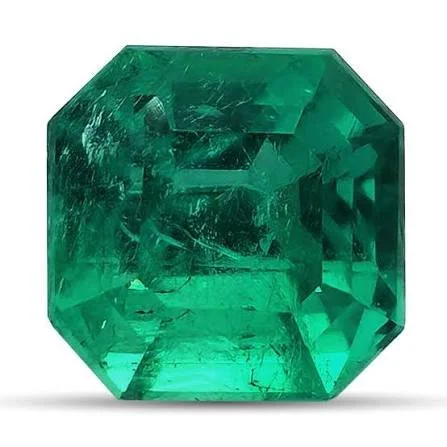
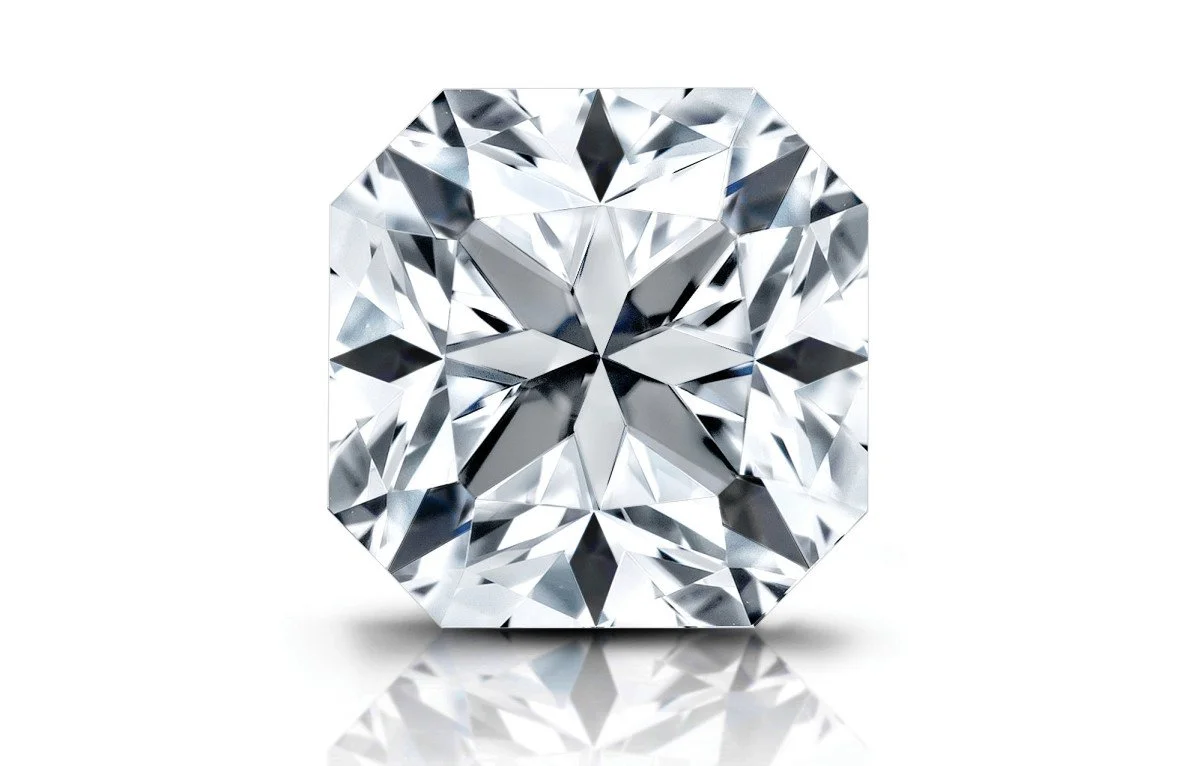
Many engagement-ring buyers begin by considering diamond. For many buyers it is the familiar option, not necessarily the only one. Once you start comparing emerald vs diamond side by side, the case for emerald gets stronger than most buyers expect.
This is not an argument that diamonds are a bad choice. They are durable, backed by a long-established grading framework, and supported by a more standardised secondary market than most coloured stones. But if you are looking at an emerald as a diamond alternative, there are specific, defensible reasons buyers choose emerald instead of diamond - and a few trade-offs worth understanding before you commit.
We work with buyers across Australia who arrive at this exact question. Some have already shopped diamonds and want a second opinion before committing. Others started with emerald because a family member or partner has one and want to understand what they are actually buying. Either way, the comparison holds up better when it is made on specifics rather than general impressions, so this article works through the actual differences: how each stone is valued, where emerald genuinely outperforms diamond, and where diamond still has the edge.
Emerald vs Diamond: What Actually Separates the Two
Diamond and emerald are graded on different logic. For standard white diamonds, value is assessed through the 4Cs: colour grade measures the degree of body colour on the D-to-Z scale, clarity grade assesses internal and external characteristics, and cut grade evaluates proportions and face-up appearance. An emerald's value runs a different direction. Colour is the primary factor, and a fine emerald is prized for saturated, even green, not for being flawless.
Hardness and Everyday Wear
Diamond sits at 10 on the Mohs hardness scale, the hardest natural material known. Emerald sits at 7.5 to 8. Both are hard enough for jewellery use, but diamond is more resistant to scratching and impact over decades of daily wear. This is a genuine trade-off, not a marketing point, and it is worth weighing honestly before you decide.
How Each Stone Gets Its Value
Diamonds are priced against a widely used system: the 4Cs, plus grading reports from labs like GIA. Emeralds are priced on colour, clarity relative to typical inclusion levels, origin, and treatment disclosure. In the trade, Colombian origin, and sometimes mine-area attribution such as Muzo, Chivor, or Coscuez, can influence market perception and pricing, depending on the individual stone and report support. You can see how these factors interact in our pricing guide.
Clarity Expectations Are Different by Design
Diamond clarity grading generally favours stones with fewer and less visible inclusions, assessed under magnification. Emerald clarity grading works on a different assumption. Visible inclusions, known in the trade as jardin, are expected in most natural emeralds, including fine ones, and are not automatically treated as a flaw the way a visible inclusion in a diamond would be. This is one of the more common points of confusion for buyers moving from diamond to emerald: a completely eye-clean emerald is unusual enough that its absence of inclusions becomes part of the value story, rather than the baseline expectation.
Emerald vs Diamond at a Glance
Hardness: Diamond, 10 on the Mohs scale. Emerald, 7.5 to 8.
Colour: For standard white diamonds (D to Z), colour grading rewards lesser body colour. Emerald is graded on the presence and saturation of colour.
Clarity philosophy: Diamond clarity grading generally favours fewer, less visible inclusions. Emerald clarity accepts visible jardin as normal, even in fine stones.
Value driver: Diamond value centres on the 4Cs and grading report. Emerald value centres on colour, origin, and treatment disclosure.
Resale market: Diamond trading is supported by a more standardised grading framework. Emerald resale depends more on the individual stone's quality and documentation.
This is a starting point, not a substitute for looking at an individual stone. Two emeralds with the same carat weight can differ substantially in value depending on colour and treatment level, and the same is true of two diamonds at different clarity or cut grades.
7 Reasons to Choose an Emerald Instead of a Diamond
1. Colour That Doesn't Depend on a Grading Scale
A diamond's grade is partly about how little colour it has. An emerald's grade is about how much good colour it has. If you want a stone with genuine, visible colour rather than a scale that rewards the absence of it, emerald is the more direct choice. A well-saturated Colombian emerald reads as green from across a room, which is a different kind of statement than a colourless diamond.
2. A Genuine Diamond Alternative With Its Own Identity
The wider availability of lab-grown diamonds has changed how some buyers think about diamond rarity and category distinction. A mined diamond and a lab-grown diamond can look identical to the naked eye, and separating them typically requires laboratory equipment. An emerald does not carry that ambiguity. If part of what you want from a ring is a stone with a clear, identifiable character, emerald offers that in a way the diamond category currently struggles to.
3. Rarity at the Top End of Quality
Most emeralds contain visible inclusions, often referred to in the trade as jardin. A large, clean, richly saturated emerald without significant treatment is genuinely difficult to source, and that difficulty is reflected in price at the top end of the market. Diamond supply and grading are generally more standardised, and lab-grown production has increased buyer access across many size and quality ranges.
4. Traceable Origin You Can Verify
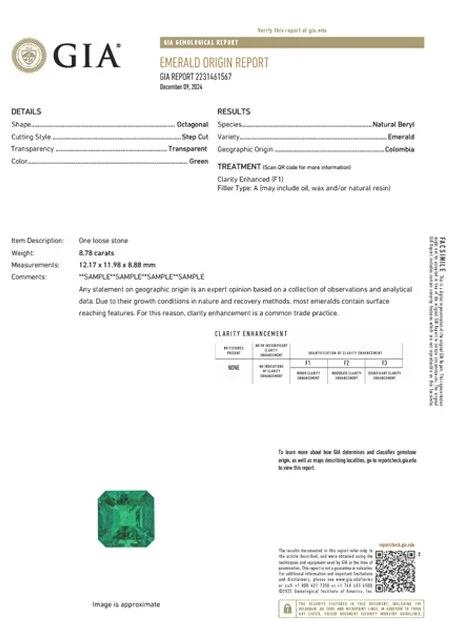
One advantage of buying through a specialist rather than a general jeweller can be traceability. Where applicable, stones are offered with independent laboratory reports stating identification, and some also include origin and treatment information. Ask about a supplier's sourcing relationships and documentation approach before deciding whether that level of detail matters to you.
5. A Ring That Stands Apart
Diamond solitaire styles remain a familiar engagement-ring choice. Choosing an emerald usually creates a more visibly distinctive look than a standard colourless-diamond solitaire. This matters more to some buyers than others, but if distinctiveness is part of what you are after, it is a legitimate and defensible reason on its own.
6. Long-Term Character and Value Retention
Retail diamond prices often include margins that are not reflected in secondary-market offers, so a diamond bought at full retail price can be worth noticeably less on resale. One factor is that retail jewellery pricing can include margins not present in wholesale or resale transactions. Emerald pricing operates on a different structure, weighted more heavily toward origin, colour, and rarity than report grade alone. This does not make emerald a guaranteed investment, and we do not present it as one, but the value drivers are different enough from diamond that they are worth understanding on their own terms. Our investment strategy guide covers this in more detail.
7. Cultural and Historical Weight
Emerald has a documented history running through Colombian, Mughal, Egyptian, and European royal jewellery for centuries. Colombia has been an important source of emeralds for centuries, and major producing districts remain active today. Choosing an emerald connects a piece of jewellery to that continuous history in a way a diamond, valued primarily for its optical performance, generally does not carry to the same degree.
How Setting Choice Affects Both Stones
The setting matters more with emerald than with diamond, but it matters for both. Diamond's hardness makes it highly scratch resistant, though any gemstone, including diamond, can still chip or break depending on cut and setting. Emerald's lower hardness and typical inclusion structure make it more sensitive to impact from the side. Protective settings such as bezel-style designs are often considered for emerald rings intended for regular wear. This is not a limitation unique to emerald. Sapphire and ruby buyers face similar setting considerations, and it is a standard part of the design conversation for any coloured stone engagement ring. Our bespoke jewellery service works through setting choice as part of sourcing the stone, rather than treating it as an afterthought once the stone is chosen.
What You Should Know Before Choosing an Emerald Over a Diamond
None of the above is a reason to dismiss diamond as a choice, and a balanced comparison should say so directly.
Durability in Daily Wear
Emerald's Mohs hardness of 7.5 to 8, combined with its typical inclusion structure, makes it more prone to chipping on impact than diamond. Protective settings, such as bezel or halo styles, are often recommended for an emerald worn daily, and periodic care to check the setting is standard practice. This is a genuine consideration, not a minor footnote, if the ring will see daily wear in an active lifestyle.
Treatment Disclosure Matters
Many natural emeralds on the market, including fine stones, show some degree of clarity enhancement, most commonly with cedar oil or comparable fillers, to reduce the visibility of surface-reaching inclusions. This is an accepted industry practice, not a defect, and it should be clearly disclosed to the buyer, ideally in an independent laboratory report where one is provided. Ask for treatment disclosure on any emerald you are considering, and confirm which laboratory issued the report.
Is an Emerald the Right Diamond Alternative for Your Engagement Ring?
If you want a stone with visible, saturated colour, a documented origin story where available, and a ring that doesn't match what most people are wearing, an emerald is a credible alternative for buyers who prefer visible colour and distinctiveness over a traditional colourless diamond look. If your priority is very high hardness and a more standardised grading framework, diamond remains the more conventional option. Both are legitimate. The right one depends on what you are actually optimising for.
A practical way to decide is to separate the emotional preference from the practical constraints. If the person wearing the ring has an active job, plays sport regularly, or works with their hands, that is a real factor in favour of diamond's superior hardness, or at minimum, a protective setting for an emerald. If the priority is a stone that looks distinctive and, in some cases, carries a documented origin opinion, emerald can address that more directly than a standard diamond.
For buyers leaning toward emerald, our bespoke jewellery service works through sourcing the right stone and setting for an engagement ring from the ground up, and our loose Colombian emerald inventory is a starting point if you already have a setting in mind.
Frequently Asked Questions
Is an emerald a good alternative to a diamond for an engagement ring?
Yes, for buyers who want visible colour and a distinct look rather than a colourless stone. Emerald is softer than diamond, so a protective setting is recommended for daily wear.
Are emeralds more expensive than diamonds?
It depends on the individual stone. Emerald pricing is driven by colour, origin, and treatment level rather than the 4Cs used for diamonds, so direct price comparisons need to be made stone by stone. Our pricing guide explains how emerald pricing works.
Are emeralds durable enough for everyday wear?
Emerald measures 7.5 to 8 on the Mohs hardness scale, compared with 10 for diamond. It is suitable for daily wear in a protective setting such as bezel or halo, with routine care to check the setting over time.
Do emeralds hold their value like diamonds?
Emerald and diamond have different value structures. Diamond pricing is standardised through the 4Cs and grading reports, while emerald value is weighted toward colour, origin, and rarity. Neither should be treated as a guaranteed investment.
What should I check before buying an emerald instead of a diamond?
Where available, ask for an independent laboratory report stating identification and any disclosed treatment, and confirm whether the emerald has been clarity-enhanced, and by how much. This information should be requested and clearly disclosed before purchase wherever applicable.