

The Complete Guide to Emerald Engagement Rings in 2026
Everything you need to know about choosing an emerald for your engagement ring from selecting the perfect stone to working with your jeweller.
Emerald engagement rings have seen a remarkable resurgence in recent years, with discerning couples seeking alternatives to traditional diamond centre stones. As a third-generation gemologist with direct access to Colombian mines, I have helped hundreds of clients navigate this journey. This comprehensive guide shares everything I have learned about choosing the perfect emerald for an engagement ring. You canview our current collection of Colombian emerald engagement rings or read on for the full guide.
Why Choose an Emerald Engagement Ring
Emeralds carry a symbolism that resonates deeply with couples seeking meaning beyond mere sparkle. For centuries, emeralds have represented rebirth, love, and wisdom. Cleopatra famously adorned herself with emeralds, and royal families throughout history have chosen them for engagement rings.
The vivid green of a fine Colombian emerald is unmatched in the gemstone world. While diamonds reflect light, emeralds absorb it—creating a depth and richness that many find more captivating than brilliance.
For couples who value individuality, an emerald engagement ring makes a statement. No two emeralds are alike; each carries its own unique pattern of inclusions, which gemologists poetically call the stone's "jardin" or garden. If you are drawn to a stone with genuine character and history, explore our bespoke emerald engagement ring service to create something truly one-of-a-kind.
Emerald vs Diamond Engagement Ring: Key Differences
Colour: Emeralds offer vivid green unmatched by any other stone; diamonds are colourless or near-colourless
Hardness: Diamonds rate 10 on the Mohs scale; emeralds rate 7.5–8, requiring protective settings
Uniqueness: Every emerald is one of a kind; diamonds are more standardised
Value: Fine Colombian emeralds can be exceptional investment-grade gems; top specimens rival diamonds in per-carat value
Understanding Emerald Quality
Unlike diamonds, emeralds are not graded on a standardised scale. This makes understanding quality factors essential before you begin shopping.
The traditional "4Cs"—colour, clarity, cut, and carat—apply to emeralds, but with different priorities. For emeralds, colour reigns supreme, followed by clarity, with cut and carat weight playing supporting roles.

The Importance of Colour
Colour accounts for approximately 50-70% of an emerald's value. The most prized emeralds display a vivid, saturated green with a slight bluish secondary hue—the colour profile that Colombian emeralds are famous for.
When evaluating colour, consider three elements:
Hue: The primary and secondary colours present. Pure green to slightly bluish-green is most desirable.
Tone: The lightness or darkness of the colour. Medium to medium-dark tones are preferred.
Saturation: The intensity of the colour. Vivid saturation commands the highest prices.
Avoid emeralds that appear too light (washed out) or too dark (appearing almost black). The ideal stone should glow with rich, vibrant green in various lighting conditions.
Clarity & Inclusions
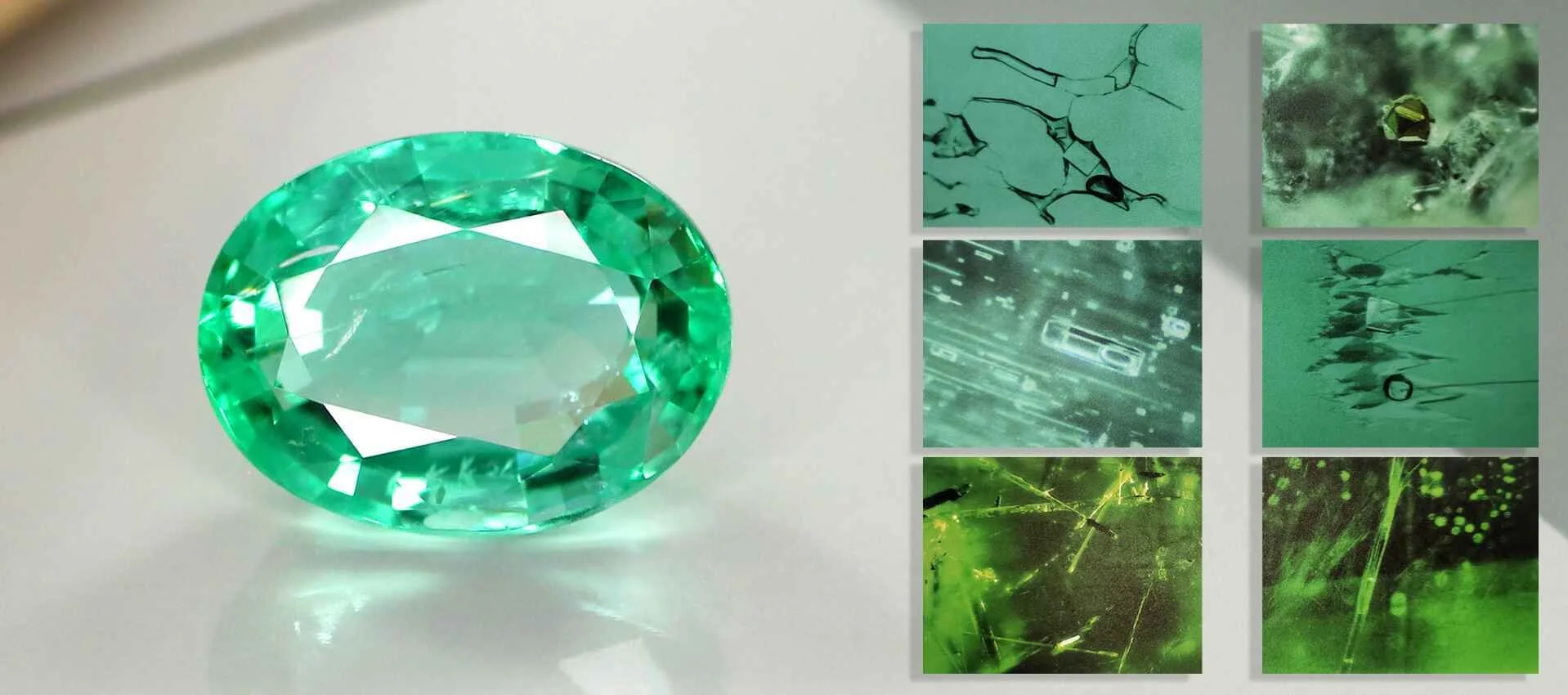
Nearly all emeralds contain inclusions—internal characteristics formed during the crystal's growth millions of years ago. Unlike diamonds, where clarity is paramount, emerald clarity is evaluated differently.
The term "eye-clean" is crucial in emerald selection. An eye-clean emerald has no inclusions visible to the naked eye when viewed from a normal distance (approximately 30cm). For engagement rings, I strongly recommend prioritising eye-clean stones. You can request viewing of eye-clean loose Colombian emeralds to understand what to look for.
Some inclusions are more acceptable than others. Fine silk-like inclusions can actually enhance an emerald's appearance by softening the colour. However, avoid stones with surface-reaching fractures or inclusions that threaten durability.
Treatments Explained
Treatment is perhaps the most misunderstood aspect of emerald purchasing. The vast majority of emeralds on the market—over 95%—have been treated to enhance their appearance.
The most common treatment is oil or resin filling, where substances are introduced into surface-reaching fractures to improve clarity. Treatment levels are categorised as:
None/Insignificant: No treatment or minimal treatment. These stones are exceptionally rare and command significant premiums.
Minor: Light treatment that is industry-standard. Excellent choice for engagement rings.
Moderate: More significant treatment. Acceptable for budget-conscious buyers if priced accordingly.
Significant: Heavy treatment. Generally not recommended for engagement rings due to durability concerns.
For engagement rings, we recommend stones with no treatment to minor treatment levels. Always request laboratory certification that discloses treatment status — credible certificates include those from GRS, Gübelin, or the AGL. Contact us to discuss treatment certification and what to look for when reviewing lab reports.
Protective Settings for Emeralds
Emeralds rate 7.5-8 on the Mohs hardness scale—harder than most gemstones but softer than sapphires or diamonds. Their natural inclusions can make them more susceptible to chipping if struck. This makes setting choice critical for engagement rings.
Recommended settings for emerald engagement rings:
Bezel Setting: A metal rim surrounds the entire circumference of the stone, offering maximum protection. My top recommendation for active lifestyles.
Halo Setting: Surrounding diamonds or sapphires provide additional protection while enhancing the emerald's presence.
V-Prong or Protective Prong: Prongs that cup the corners of emerald cuts protect the most vulnerable points.
Avoid tall, exposed settings that leave the stone vulnerable to impact. Our jewellers will discuss your lifestyle during the design consultation to find the right balance of protection and aesthetics. Explore our custom emerald engagement ring designs to see how protective settings can be made beautiful.
Where to Source Your Emerald
You have several options for acquiring an emerald for your engagement ring:
High-End Jewellers: Offer convenience and beautiful finished pieces, but typically charge significant markups on stones.
Gemstone Dealers: Can offer better value on loose stones. Look for dealers with direct mine access and gemological credentials.
Auction Houses: Occasionally offer exceptional stones, but require expertise to navigate.
Many clients today choose to purchase a loose emerald and then work with a jeweller to create a custom setting. This approach often provides the best value and allows for a truly unique ring.
Why Buy Direct from a Colombian Mine Specialist?
Access to stones before they enter the retail market
Full provenance documentation from mine to client
Third-generation gemological expertise in Colombian origin verification
Transparent treatment disclosure with laboratory certification
Serving Sydney clients and international buyers worldwide
Working With Your Jeweller
If you choose to purchase a loose emerald and commission a setting, finding the right jeweller is essential. Look for someone with experience setting emeralds— they require more careful handling than diamonds.
Questions to ask your jeweller:
How many emerald engagement rings have you created?
What setting styles do you recommend for this particular stone?
What metal do you recommend? (Platinum offers the best protection)
What is the timeline and process for the commission?
Do you offer warranties or maintenance services?
A skilled jeweller will evaluate your emerald and may suggest setting styles that work with any particular characteristics of the stone. Book a consultation with our team we work directly with clients across Sydney and Australia to guide stone selection and commission beautiful, lasting pieces.
Budget Considerations
Emerald pricing varies dramatically based on quality. Here are general ranges for engagement ring-quality Colombian emeralds (2026 prices):
Entry Level (0.5-1ct, good colour): $2,000-$5,000 AUD
Mid-Range (1-2ct, fine colour, minor treatment): $5,000-$15,000 AUD
Fine Quality (1-3ct, exceptional colour): $15,000-$50,000 AUD
Exceptional/Investment Grade: $50,000+ AUD
Add $2,000-$10,000+ for the setting, depending on complexity and metal choice. Purchasing a loose stone and commissioning a setting separately often provides better value than buying a finished ring.
Budget and not sure where to start? Contact us for an obligation-free consultation we can work across a range of budgets and help you find the best stone for your investment.
Final Thoughts
An emerald engagement ring is a distinctive choice that speaks to individuality, history, and a deeper appreciation for natural beauty. With proper selection and setting, an emerald can be worn daily for a lifetime, developing its own story alongside your relationship.
Take your time with this decision. View stones in person whenever possible. Trust certified gemologists and reputable sources. And remember the right emerald is the one that speaks to you.
Frequently Asked Questions
Are emeralds a good choice for an engagement ring?
Yes — with the right selection and setting, emeralds are an excellent choice for an engagement ring. The key is prioritising eye-clean stones with minor treatment levels and choosing a protective setting such as a bezel or halo. Emeralds worn in well-designed settings can last a lifetime with proper care.
What makes Colombian emeralds different from other emeralds?
Colombian emeralds are prized for their distinctive vivid green colour with a slight bluish secondary hue a profile produced by the unique geology of Colombian mines, particularly in the Muzo and Coscuez regions. Chromium and vanadium give Colombian emeralds a warmth and depth that emeralds from other origins (Zambia, Brazil, Zimbabwe) rarely match. Top Colombian specimens are among the most valuable coloured gemstones in the world.
How do I verify the origin of a Colombian emerald?
Origin verification requires a certificate from a reputable gemological laboratory such as GRS, Gübelin, or the AGL. These laboratories test trace element chemistry and inclusion characteristics to confirm Colombian origin. Always request laboratory documentation when purchasing a fine emerald. Our team can walk you through certification at any stage of the buying process.
How do I care for an emerald engagement ring?
Avoid ultrasonic and steam cleaners, as these can damage oil treatments and stress inclusions. Clean your emerald gently with a soft brush, mild soap, and warm water. Store separately from harder gemstones (such as diamonds) that could scratch the surface. Have your ring professionally inspected annually to check prong integrity and re-oiling if needed.
What is a fair price for a Colombian emerald engagement ring in Australia?
As a guide, a quality Colombian emerald engagement ring in Australia (stone plus setting) typically ranges from $7,000 to $60,000+ AUD depending on stone quality and setting complexity. Investment-grade specimens exceed this range significantly. The best approach is to set a budget, establish your quality priorities, and work with a specialist who can source the best stone available within that range.